Mango Upside Down Cake
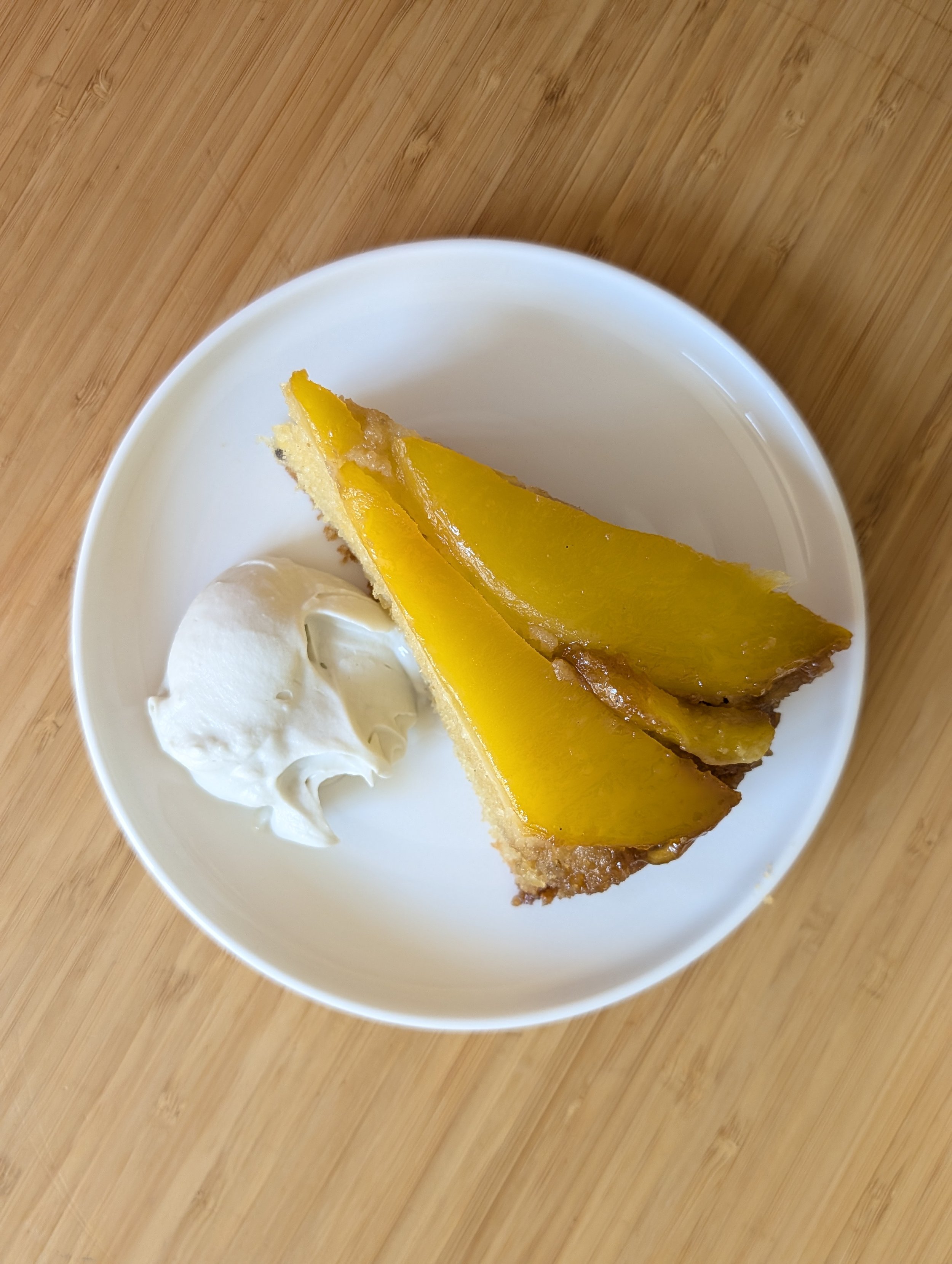
Caramel? Check!
Seasonal mango? Check!
Gnarly caramelised edges? Check!
This cake, a spin on a recipe by Belinda Jeffery, is an ode to the long, sunny summer days that will soon make way for the effortless cool of Autumn. It’s also a great way to celebrate the remaining weeks of mango season.
Like its pineapple-crowned sister, the unabashed retro and relaxed nature of this golden beauty is a large part of its charm. This cake doesn’t concern itself with sharp edges, or a perfectly symmetrical pattern on the top. Rather, it is concerned about giving you, the lucky person who gets to eat it, an unforgettable flavour and textural ride.
The cake itself is delightfully soft and studded with cardamom seeds that provide a surprise crunch and burst of floral spice in every mouthful. But it’s the crown that adorns the top and edges of this cake that are the main attraction. The silky mango infuses its tropical fruitiness into the caramel, which in turn, bubbles up the sides of the cake as it bakes creating what I think is the finest edge to a cake I’ve ever tasted. I can’t begin to tell you how good the contrast is between the soft cake, silky mango and the gnarly caramelised edge of the cake.
This cake is really at its best served warm making it the perfect dessert for a long lunch or dinner party. That said, I took this cake to work the day after baking and it was just as delightful at room temperature. Whichever way you serve it, I implore you to serve it with a dollop of my whipped white chocolate and coconut ganache. It’s best to make this the day before, so it has enough time to chill in the fridge. But in a pinch, you could make it the same day as long as it has at least 4-5 hours in the fridge.
One more thing. You know how I mentioned how relaxed the cake is? Well, there’s just one part of the recipe where I do need you to be slightly stricter. It’d around the time between taking the cake out of the oven and flipping it out of the tin. Do it too soon and you risk burning yourself. Do it too late and the caramel may start to harden which can make your cake stick to the tin. As you’ll see in the recipe, leave the cake for about 4 minutes before you run a knife or spatula around the edges, making sure you get right to the base of the tin so all the caramelly bits don’t have a chance to stick.
If, however, your cake does stick and/or tear as it comes out, embrace the relaxed ethos of the cake and simply scoop it into some serving bowls, top with the whipped ganache (or vanilla ice-cream) and call it a pudding!
Whichever way you end up serving it, one thing is for certain. Everyone will be going back for another slice!
And finally, a big thanks to Belinda Jeffery
Ingredients
Caramel and Mango Topping (which actually starts as the base!)
80g unsalted butter
100g light brown sugar
½ teaspoon fine sea salt
2 large mangoes
Cake
190g unsalted butter, at room temperature
190g caster sugar
3 eggs, room temperature
1 teaspoon vanilla extract
100g almond meal
100g plain flour
1 teaspoon baking powder
½ teaspoon fine sea salt
1-2 teaspoons cardamom seeds
Whipped White Chocolate and Coconut Ganache or vanilla ice cream to serve (optional)
Method
Preheat your oven to 180 degrees C. Grease and line the base of a 23cm cake tin, and flour the sides by rubbing a knob of butter all around the inside edges of the tin to evenly coat it in butter. Next, holding the tin on its side, spoon about a tablespoon of plain flour onto the side of the tin. Rotate and gently tap the tin to move the flour around the sides of the tin, lightly coating the surface. Do two-to-three full rotations before tapping any excess flour.
To prepare the mangos, slice the mango cheeks away from the large pip with a large knife, keeping the knife as close to the pip as possible. Switching to a small sharp knife, make an incision 3-4mm deep between the skin and the flesh around the top third of the mango. With a rounded glass large enough to fit the mango cheek, push the rim of the glass into the incision and gently push down, so the glass slides between the mango flesh and the skin, separating the two. Repeat with the remaining three mango cheeks, and then slice them longways into 2cm wedges and set aside.
Make the caramel by melting the butter, sugar and salt in a small saucepan over a low heat, whisking until fully combined. Remove from the heat just before it comes to the boil and pour the caramel into the bottom of the prepared cake tin. Gently tilt the tin so the caramel evenly coats the base. Set aside to cool.
Prepare the cake batter by whisking the almond meal, flour, baking powder, salt and cardamom seeds in a bowl until fully combined and free of clumps. Set aside. Cream the butter and sugar together until light and fluffy (about 3 minutes). Add the eggs one at a time, beating on low until fully combined after each egg is added. Add the vanilla along with the final egg. Sprinkle in the prepared dry ingredients and fold with a spatula until just combined.
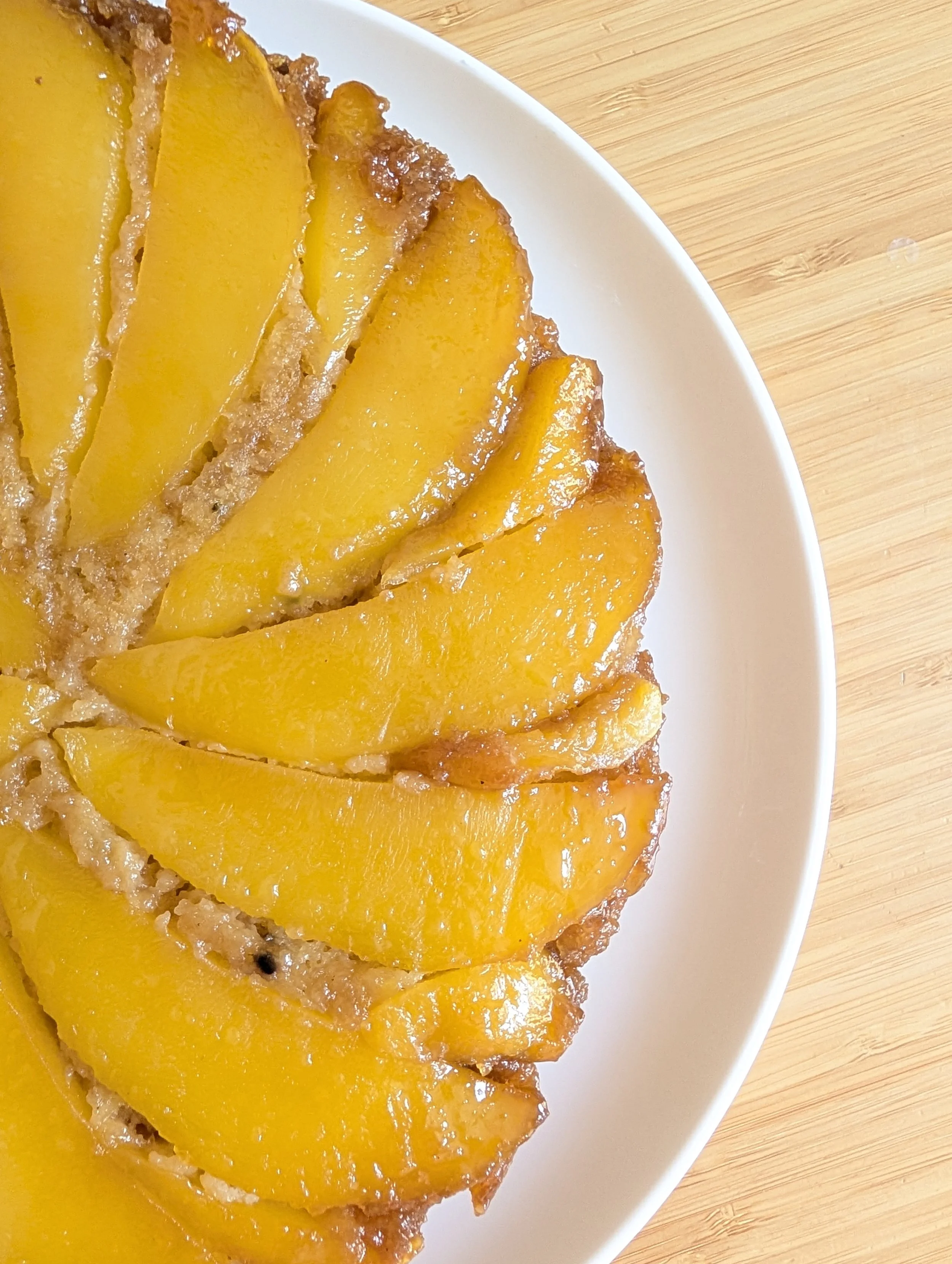
Arrange the mango pieces in a pretty spiral pattern, and then carefully spoon over the cake batter, gently smoothing the surface with an offset spatula.
Bake for 40-50 minutes, or until a cake tester comes out with only a few moist crumbs on it. Don’t be alarmed to see the caramel bubbling up the side of the cake as it bakes. This creates a delicious caramelly edge to the cake that is a beautiful contrast to the lighter interior.
Once baked, leave the cake to cool for a few minutes before gently running a knife or spatula around the edge to loosen any bits that may have stuck to the tin. Grab your serving plate and flip the cake (with confidence!), being mindful that the tin will still be rather warm. Serve warm with a generous dollop of whipped white chocolate and coconut ganache.
Any leftovers will keep, covered, in the fridge for 3-4 days. Serve any leftovers at room temperature or heat the slices briefly in the microwave.